
Two skills, and most guides only teach the first: picking a whole fruit at a stall, and judging a dehusked box you’ve been sold. We’ll teach you both — including how to judge ours.
A ripe durian announces itself. Hold it near the base and you should get a rich, sweet-heavy aroma through the shell. Faint or grassy means under-ripe; sharp, sour or boozy means it’s gone past its best. No smell at all through a thick husk isn’t automatically bad — some varieties are quieter — which is why you check more than one signal.
Hold it up (by the stem, or with gloves) and give it a soft shake. A dull knock of seeds moving slightly means the flesh has ripened and pulled away from the walls — good. Total silence means the flesh is still stuck fast: under-ripe. A loose, sloshing rattle means over-ripe and heading watery.
The stem is the fruit’s freshness clock. It should look moist and pale green-brown inside if you scratch it lightly. A dry, dark, shrivelled stem means the fruit dropped days ago. Also beware a stem cut suspiciously flat and short — sometimes done to hide its age.
Between two fruits of the same size, the lighter one is often the better one — counter-intuitive, but a lighter fruit usually means thick flesh and small seeds, while a heavy one can be all husk, water and seed. Sellers hate this tip. We’re telling you anyway.
A knuckle-tap or the flat of a knife should sound slightly hollow and soft — “bok bok”, not “tak tak”. A hard, solid sound means unripe flesh; a completely dead sound can mean it’s overripe and collapsing inside.
Dehusked boxes are how most durian is sold now — including by us — and it removes most of the signals above. Here’s what good looks like once it’s in the box:
Good flesh has a soft sheen but the box shouldn’t have juice pooling at the bottom. Pooled liquid usually means over-ripe fruit, or fruit that’s been sitting too long. (Exception: naturally wet varieties like Red Prawn will always look moister — that’s the variety, and we warn you about it on its profile.)
MSW should be gold, Black Thorn apricot-orange, Red Prawn blushed, D24 pale cream. Within one box, mild variation is normal, especially when the box holds flesh from two fruits. Grey patches, dark bruised spots or a dull waxy bloom are not normal.
Open the seal and trust your nose. Rich and pungent is right. A sour tang, vinegar sharpness or a fermented alcohol note means the fruit is past it — whoever sold it to you owes you a replacement.
Press gently through the wrap: the flesh should give like thick custard, not collapse like wet paper. Shrivelled, wrinkly lobes mean old fruit that’s been losing moisture.
Now you know the colours, check them. If you paid for Black Thorn and the flesh is bright yellow with no orange in it, ask questions. Any seller doing things properly — us included — will happily tell you which fruit went into your box.
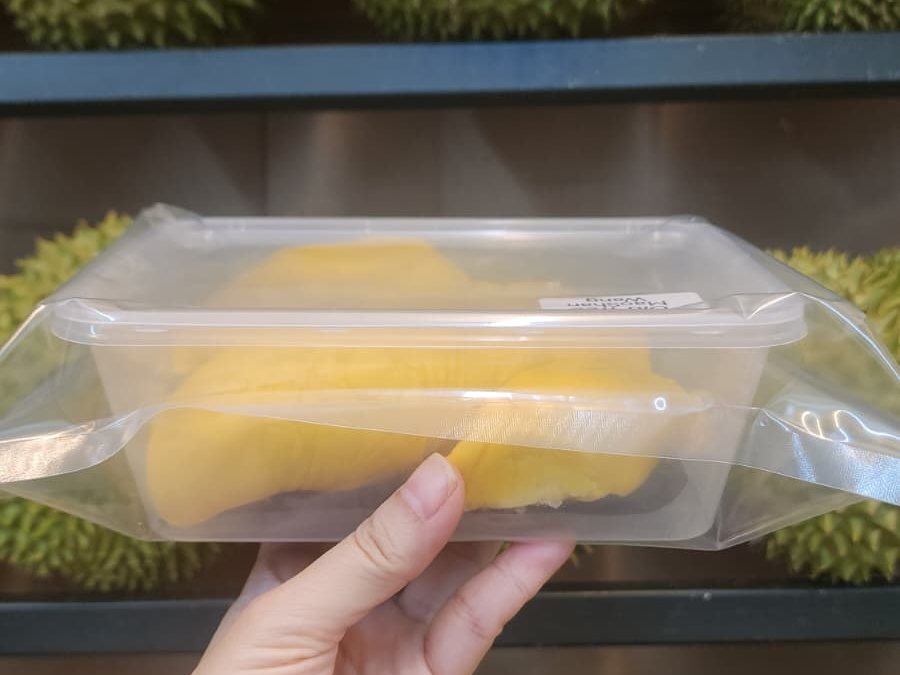
Everything above applies to our boxes too. If yours fails these checks: WhatsApp us within 2 hours of receiving it, with photos of the flesh and the box, and your order details. Genuinely off fruit — spoiled, wrongly ripe, wrong variety, damaged in transit — gets replaced or refunded, your pick.
What we won’t refund is nature: bitterness and sweetness vary between fruits of the same variety on the same day. That’s durian. Tell us your taste preference when ordering and we’ll pick your boxes to match it — that’s the part we can control.